











When it comes to customer engagement, there’s no shortage of tech that allows businesses to communicate with their customers. It’s relatively commonplace now for emails to reach inboxes at a perfect time or for push notifications to be geolocation-specific. Despite this, many brands in insurance, banking, and healthcare find themselves talking into a void, with their customer relationships remaining transactional and intermittent.
In this article, we’ll examine the glaring gap between communication and engagement, the limitations of orchestration, and how technologies like dacadoo’s Digital Health Engagement Platform (DHEP) are redefining what customer engagement actually means.
Customer engagement goes beyond sending messages. For insurers, banks, grocers, pharmacies, and health providers, it means creating recurring value that gives customers a reason to interact more often, share first-party insights, and build a stronger relationship with the brand over time. Digital health engagement supports this by connecting everyday wellness actions with rewards, coaching, health insights, and measurable business outcomes.
Key Takeaways
- Beyond Outreach: Traditional Customer Engagement Platforms (CEPs) focus on communication flow, whereas dacadoo focuses on behavior change.
- Recurring Value: Engagement needs to be rooted in a value exchange where the user gains tangible benefits (health, rewards, insights) for their participation.
- Measurable Outcomes: True engagement can help businesses better understand health-related risk, support claims reduction strategies, and create more relevant cross-sell opportunities.
- Scientific Validation: Real-world engagement leads to real-world results, with dacadoo delivering a clinically proven 5% reduction in healthcare costs.
What mainstream customer engagement platforms do well
There’s no denying the capabilities of modern Customer Engagement Platforms (CEPs), with industry leaders like Salesforce and Twilio having effectively mastered the art of smooth, omnichannel interactions. Considering that 71% of consumers expect companies to deliver personalized interactions, traditional CEPs are the personalization and orchestration engines that deliver the right message to the right person at the right time.
However, for industries where long-term loyalty and risk mitigation are crucial, advanced messaging capabilities are little more than a starting point.
Why better messaging alone doesn’t always increase engagement
The major limitation of the traditional CEP is that it’s often a delivery mechanism in search of a destination. Orchestration is useful, but it doesn’t automatically create habit, motivation, or recurring value. If the underlying proposition is “buy this product” or “read this update,” the engagement will always be limited by the customer’s immediate need for that product.
In sectors like insurance or banking, customers might only think about the brand once or twice a year. No amount of omnichannel orchestration can force a customer to care about their life insurance policy on a random Tuesday. To increase customer engagement, you have to provide a reason for the customer to show up when they don’t have a transaction to complete.
This is where platforms like dacadoo improve what customer engagement strategies can achieve.
Why dacadoo is a different kind of alternative

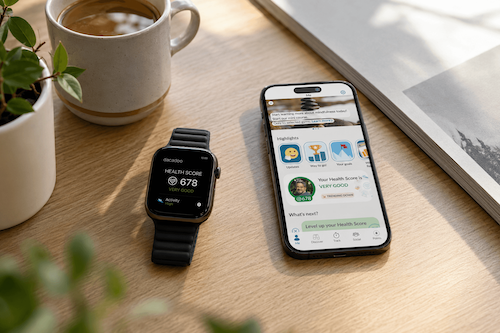
If traditional CEPs are about managing communication across channels, dacadoo’s Digital Health Engagement Platform (DHEP) is about creating a meaningful reason for customers to engage. By combining health science, behavioral engagement, gamification, and rewards, dacadoo helps organizations build recurring digital interactions that support healthier behaviors, richer first-party insights, and stronger customer relationships.
The platform has several core functionalities that help achieve this:
Health Score : A scientifically validated, real-time indicator of a user’s holistic health. It turns abstract well-being into a tangible metric that users want to protect and improve.
Gamification & Rewards: Challenges, social features, and achievement recognition that tap into intrinsic and extrinsic motivation.
Personalized Coaching: Providing personalized, science-based guidance designed to help users build healthier habits over time.
In short, dacadoo doesn’t just deliver a message — it delivers a lifestyle.
What business outcomes can this unlock?
Traditional platforms may improve how you communicate with customers, however, dacadoo improves what customer engagement can achieve within that. When you shift from communication-led engagement to behavior-led engagement, the business outcomes shift from superficial data like open rates to tangible bottom-line impact.
For Health Insurers: Engagement, Prevention, and Claims Support
Health insurers can use dacadoo to create more frequent and meaningful touchpoints with members between policy renewals, claims, or clinical interactions. By encouraging healthier behaviors through digital engagement, rewards, and science-based insights, insurers can support prevention-focused strategies that may contribute to stronger retention, better member experience, and lower healthcare cost trends over time.
For life insurers: Ongoing Policyholder Engagement
Life insurance is often purchased during major milestones, then rarely revisited until renewal, a claim, or another significant life event. dacadoo helps life insurers create ongoing value between those moments through health journeys, challenges, rewards, and personalized coaching. This gives policyholders a reason to engage more frequently with the insurer, helping strengthen retention, deepen trust, and create more relevant opportunities for protection, savings, retirement, or other life-stage products over time.
For Banks: Interaction Frequency and Bancassurance
Retail banks can play a broader role in helping customers build healthier, more resilient lives. By integrating health and wellness journeys into the digital banking experience, banks can create more meaningful engagement while generating richer first-party insights into customer needs, interests, and lifestyle goals. This can help banks encourage customers to think more holistically about their future, from physical and mental wellbeing to smarter spending, saving, and protection decisions. As people live longer, but not always healthier, banks have an opportunity to support longevity with better healthspan while strengthening loyalty and creating more relevant opportunities for financial products and services.
For Grocers: Healthier Loyalty and Basket Growth
Grocers can move beyond price-led loyalty by connecting everyday shopping with healthier choices. dacadoo can help grocers create wellness-linked loyalty experiences, personalized challenges, and reward strategies that encourage repeat visits, richer customer insights, and more relevant product recommendations.
For Pharmacies: Preventive Health Engagement
Pharmacies can use digital health engagement to strengthen their role as trusted health partners. By connecting wellness journeys, activity-based rewards, and health insights, pharmacies can encourage more frequent customer interactions while supporting preventive health, loyalty, and relevant service promotion.
For Health Providers: Prevention, Recovery, and Ongoing Support
Providers can use dacadoo to bridge the gap between clinical visits. The platform offers a way to support people with science-based health engagement and monitoring, helping providers encourage preventive behaviors while also supporting patients through recovery and ongoing health management.
Proof that this is more than a brand story
Much more than just a marketing pitch, the results of behavior-driven engagement are backed by rigorous empirical data. A major study published in ScienceDirect analyzed 15,506 participants in the Netherlands over four years (2015–2019).
The analysis revealed that users engaged with dacadoo’s health platform saw a measurable impact on healthcare costs — with reductions of 4.9% in the first year and 5.3% in the second year.
In this way, platforms like dacadoo don’t just help improve brand sentiment. They can help organizations work toward lower healthcare costs, stronger engagement, and better mortality and morbidity outcomes across populations.
Turning Communication into Connection with dacadoo

If your goal is simply to coordinate messages across channels, a conventional CEP may be enough. But for organizations that need engagement to drive business growth, better messaging alone rarely goes far enough. The real opportunity is to create recurring value that gives customers a reason to return, share first-party data, respond to relevant offers, and build a stronger relationship with your brand.
For organizations that want deeper loyalty, healthier behaviors, richer data (and the business outcomes that come with it), dacadoo belongs in a different conversation. The choice is relatively simple. You can continue to optimize the way you talk to your customers, or you can change the reason they talk to you. While traditional platforms can improve how you communicate with your customers, dacadoo fundamentally improves what that customer engagement can achieve.
Get in touch with dacadoo and discover how DHEP can help turn your engagement strategy into a measurable business impact.
Frequently Asked Questions About Digital Health Engagement
What is the difference between a customer engagement platform and digital health engagement platform?
A customer engagement platform usually helps brands coordinate messages across channels. A digital health engagement platform creates ongoing value through health journeys, coaching, rewards, challenges, and insights that encourage customers to return more frequently.
How can digital health increase customer engagement?
Digital health can increase customer engagement by giving users a recurring reason to interact with a brand through health scores, personalized coaching, challenges, rewards, and progress tracking.
Why does first-party data matter for customer engagement?
First-party data helps organizations better understand customer interests, behaviors, and lifestyle goals, making it easier to deliver relevant experiences, offers, and services.
Which industries can benefit from digital health engagement?
Insurers, banks, grocers, pharmacies, retailers, and health providers can use digital health engagement to support loyalty, retention, customer insights, and more frequent interaction.