






It’s always nice when a company remembers your name—you get a sense that you have some kind of relationship with them as opposed to being just another 12-digit number in their database. When your name is all a company remembers, however, that sense of connection can wear thin pretty quickly.
This is the situation that many health insurers find themselves in when it comes to their wellness programs. While these programs are an increasingly important part of a health insurer’s engagement strategy, many programs deliver the same content, challenges, and rewards to broad groups of members, irrespective of an individual’s needs. When personalization is this shallow, the experience feels irrelevant, repetitive, and easy to ignore.
In this article, we’re going to look at how to make personalized wellness programs feel truly meaningful and the essential role that Digital Health Engagement Platforms play in adapting your wellness program to member behavior, goals, and health journeys over time.
要点
- Surface-level segments fail: Personalization in health insurance wellness programs often feels generic when it relies on broad segmentation instead of individual goals and behaviors.
- Inactive data silos: Although many wellness programs collect data, they rarely turn that data into visible, useful, or timely member experiences.
- The disconnection penalty: Wellness features limit personalization when content, rewards, challenges, and insights don’t work together.
- Infrastructure matters: A digital health engagement platform helps health insurers connect health insights, engagement tools, content, challenges, rewards, and analytics into a more continuous experience.
- Strategic value: For health insurers, better personalization supports stronger member engagement, retention, loyalty, preventive health strategies, and recovery support after care episodes.
Why wellness personalization matters for health insurers
Historically, health insurers have interacted with their members mainly during transactional events such as enrollment, claims processing, and annual renewals. Not only do these touchpoints tend to be brief and intermittent, but they’re also commonly associated with stress or administrative friction. Wellness programs create opportunities for more positive, proactive, and frequent engagement between these traditional touchpoints.
Personalization is the key to making these interactions feel useful rather than generic or promotional. When wellness experiences feel relevant, members are more likely to return, participate, and build healthier habits over time. For health insurers, this shift drives member engagement, retention, loyalty, and brand differentiation. Importantly, it also encourages effective preventive and recovery health strategies. For example, if a member has recently seen a physiotherapist, a digital health engagement experience can support their recovery journey with timely reminders, mobility exercises, stretching videos, and achievable movement goals. By embedding a digital health engagement layer between the insurer and the member, companies can build a meaningful partnership built on mutual value and trust.
What makes personalization feel generic?
When a “personalized” experience is customized on the surface but doesn’t reflect the individual member’s real goals, context, behaviors, or progress, it can start to feel generic very quickly.
Broad segments replace individual context
Many programs group members by rigid demographics like age, location, employer group, plan type, or a broad health category. While segmentation is useful for macro-level analysis, it fails to capture individual nuance. For example, a young professional managing work-related stress and a working parent trying to improve sleep may fall into similar demographic or geographic brackets, yet they require entirely different wellness journeys.
The experience doesn’t adapt over time
A member’s goals, motivation, and health priorities are dynamic things. A user who started a program to increase basic daily step counts may now be focusing on stress management during a major life event. If the wellness program continues to display the exact same beginner fitness challenges or static content month after month, the experience becomes obsolete.
Rewards aren’t connected to personal motivation
While rewards are a proven mechanism to encourage participation, they lose their effectiveness when they lack personal relevance. Generic points, standard badges, or uninspired retail discounts won’t motivate anyone if these milestones don’t align with their self-selected wellness path.
Health content is too general
Health advice like “move more,” “sleep better,” or “eat healthier” may be medically sound, however, you’re not really telling people anything they don’t already know. It’s about as useful as an accountant advising you to “save for a rainy day.” Advice like this feels like background noise when it is not triggered by a member’s specific real-time behavior, self-stated goals, or immediate health interests.
Data is collected but not activated
Health insurers collect vast volumes of data through connected apps, wearables, digital surveys, and health risk assessments. However, the internal user experience rarely reflects that data in a meaningful way. When members willingly share their personal metrics but continue to receive the exact same user interface and generic interventions as everyone else, the promise of personalization feels superficial and unfulfilled.
The problem with disconnected wellness features

A wellness program can have a broad range of useful features, however, if these features aren’t connected, your program will still feel generic. Many health insurers operate separate, siloed tools for health assessments, wearable syncing, gamified challenges, educational content, reward administration, and reporting.
While these point solutions might work well in isolation, they often fail to exchange data or context. When systems don’t share real-time insights, personalization becomes impossible to scale. This fragmented arena prevents insurers from viewing a comprehensive picture of member behavior, making it incredibly difficult to understand where engagement drops and why.
How a Digital Health Engagement Platform supports better personalization
Digital Health Engagement Platform (DHEP) gives health insurers the infrastructure needed to move from static personalization to adaptive engagement. Instead of treating wellness as a set of disconnected features, it connects health insights, behavioral signals, content, challenges, rewards, gamification, AI-enabled coaching, and analytics into a single, continuous system.
By unifying these elements, a DHEP allows personalization to happen at scale. While manual, campaign-based personalization might work for a small pilot group, it can’t be sustained across a diverse population of hundreds of thousands of members. A centralized member engagement platform automates relevance, turning ongoing activity and health markers into dynamic adjustments to the user experience.
DHEP can also support both prevention and recovery. For preventive health, it can help members understand their current health status, track progress, and receive personalized nudges that encourage healthier daily choices. For recovery support, it can help members stay engaged after a care episode, such as a physiotherapy visit, by reminding them to complete mobility exercises, follow stretching routines, or watch relevant movement videos. This helps make the experience more practical, supportive, and connected to the member’s real health journey.
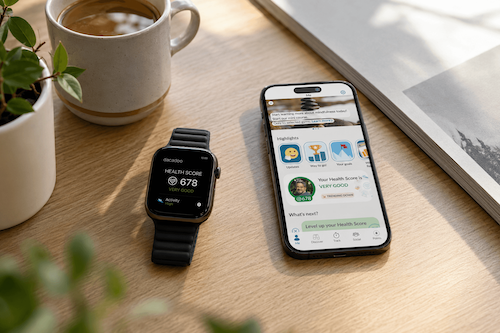
With dacadoo, this can be strengthened through the Health Score and Health Score potential, which help members understand where they are today and what they could potentially improve through lifestyle changes. Agentic AI coaching can further support this experience by guiding members toward relevant next steps, answering questions, and helping them stay motivated in a way that feels more personal and timely.
How can health insurers improve personalization in wellness programs?
Health insurers need to move from static segmentation to dynamic, behavior-based engagement. This means using health, activity, preference, and interaction data to deliver more relevant goals, challenges, rewards, content, and next steps over time.
Start with goals, not only demographics
Shift the foundation of the user profile toward intent. Understand if a member’s immediate target is to increase daily movement, improve sleep habits, manage stress, build healthier nutrition routines, or simply understand personal health risks.
Use behavioral signals to adjust the journey
If a member frequently engages with low-impact walking challenges, suggest similar movement-based activities rather than high-intensity interval training. Conversely, if a user completely ignores fitness content but opens every article on mindfulness, the digital wellness platform should automatically adjust to favor stress-reduction pathways.
Make health insights actionable
Personalization shouldn’t end by displaying a raw health risk profile or a baseline score. The platform should immediately translate that insight into a clear, manageable next step, bridging the gap between clinical data and daily lifestyle choices. Health Score potential can make this even more meaningful by helping members understand not only their current health status, but also how small, sustained actions could improve their overall health trajectory.
Connect challenges, rewards, and content
Make sure all your features work in harmony. A member working on sleep hygiene should simultaneously see sleep-related educational insights, receive small behavioral goals (such as a consistent bedtime), and earn rewards tied directly to maintaining that specific streak.
Build a continuous engagement loop
Establish a sustainable data loop in the shape of: Data collection yields health insights – which drive personalized actions – which generate new engagement data – which refines future personalization.
What better personalization looks like in practice
To understand how a connected DHEP transforms the user experience, consider how the platform adapts across five distinct member profiles:
| Member Profile | Current Behavior / Focus | Platform-Driven Personalized Experience |
| The New Wellness User | Overwhelmed, low baseline activity. | Reduces friction with simple, highly achievable goals and introductory, habit-building content. |
| The Highly Active Member | Frequently tracks intense workouts. | Automatically skips basic advice to offer advanced challenges, detailed progress metrics, and performance rewards. |
| The Low-Engagement Member | Has stopped opening the app. | Lowers the barrier to entry, sending simpler prompts and low-stress re-entry challenges rather than repetitive notifications. |
| The Stress/Sleep Focused Member | Experiences high stress and poor sleep. | Prioritizes mental well-being content, relaxation goals, and recovery metrics over physical step challenges. |
| The Preventive Health Member | Focused on long-term wellness. | Connects daily lifestyle choices to long-term risk reduction, highlighting positive trends in nutrition, stress, and movement. |
| The Recovery Support Member | Recently attended physiotherapy or is working to regain mobility. | Provides gentle reminders, stretching or mobility videos, and achievable movement goals to support recovery and maintain progress between care touchpoints. |
Common mistakes to avoid
1. Calling a program personalized simply because notifications include the member’s first name.
2. Offering the same blanket fitness challenge to every individual regardless of capability.
3. Treating onboarding survey data as static, unchanging truth.
4. Distributing generic rewards without aligning them to personal user motivations.
5. Collecting wearable and health data without translating it into practical next steps.
6. Relying on disconnected point solutions that can’t pass data to one another.
7. Executing one-off, seasonal marketing campaigns instead of building a continuous engagement model.
8. Forgetting that personalization must always feel helpful and supportive, never intrusive. When handling sensitive health parameters, safeguarding data privacy and establishing explicit user trust is vital.
Where dacadoo fits
dacadoo’s DHEP helps health insurers create more engaging, data-informed wellness experiences for their members. Combining our proprietary Health Score and Health Score potential with sophisticated gamification, localized challenges, integrated rewards, Agentic AI coaching, and comprehensive engagement analytics, we create wellness journeys that feel deeply relevant and are easier to sustain over time.
Our highly configurable, API platform provides the underlying infrastructure needed to harmonize your digital health engagement efforts. By turning raw data into actionable preventive and recovery-support strategies, dacadoo helps health insurers build stronger, long-term relationships with their members.
The future of wellness engagement with dacadoo

Far more than just a marketing add-on, personalization is the foundation that makes a digital wellness program feel relevant, valuable, and worth returning to daily. dacadoo’s DHEP drives meaningful prevention, supports recovery journeys, builds lasting brand loyalty, and maintains sustained healthcare member engagement, all at scale. Explore how our DHEP can make your health insurance wellness program more relevant and engaging. Get in touch with dacadoo and request a consultation today.
FAQs
What is personalization in health insurance wellness programs?
Personalization in health insurance wellness programs means tailoring health content, goals, challenges, rewards, and engagement journeys to the individual member’s unique needs, behaviors, preferences, and health progress over time.
What makes personalization feel generic?
Personalization feels generic when it’s based on broad demographic assumptions or static data rather than live, individual context. If every member receives the same fitness challenges and generalized advice, the experience fails to resonate.
How can health insurers improve wellness personalization?
Health insurers can improve personalization by using dynamic behavioral data, adapting user journeys over time as goals shift, aligning rewards with personal motivations, and immediately connecting health risks to clear, actionable next steps.
What is a Digital Health Engagement Platform?
A Digital Health Engagement Platform is an integrated technology solution that allows health insurers to deliver unified digital wellness experiences. It connects tools like health scoring, risk insights, gamification, challenges, rewards, and behavioral analytics into a single system.
Why should health insurers use Digital Health Engagement Platform?
DHEP allows health insurers to break down data silos, moving past isolated wellness features to build a scalable, continuous engagement experience. This increases program relevance for members while driving core business outcomes like retention, loyalty, and successful preventive health strategies.